
Monk Parakeet (Quaker Parrot)
General Overview
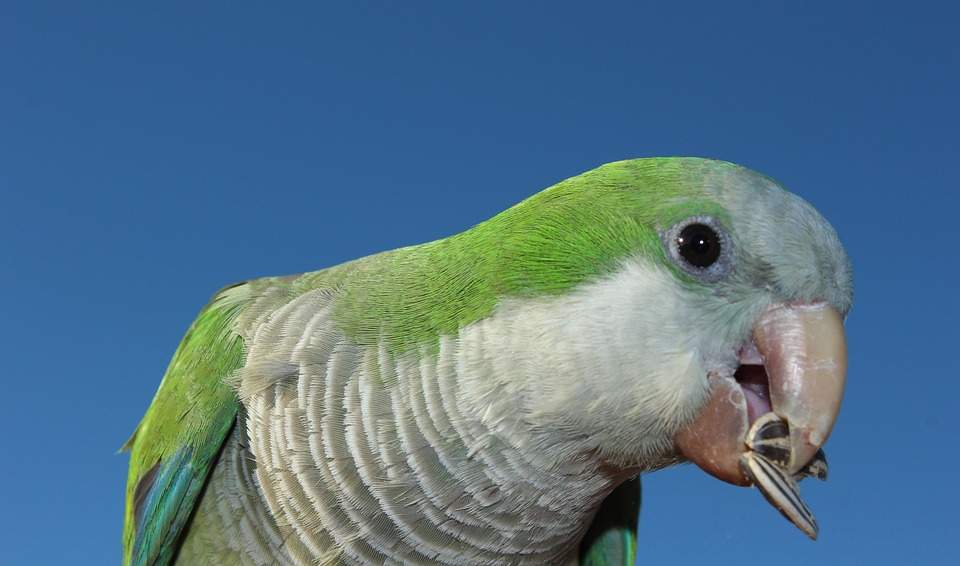
Quaker parrots, also known as monk parakeets, are known for their charming, comical personalities and their ability to learn human speech. They offer all the fun of a large parrot in a smaller package, making them an excellent choice for bird lovers.
They make popular pets for dedicated beginners and adapt well to living in a “human flock” setting. However, in some parts of the U.S., it’s illegal to keep them as pets, so check your local laws before adopting one. Discover everything about the Quaker parrot, including temperament, diet, and care needs.

History/Origin
Native to a small region of South America, Quaker parrots’ range extends from central Bolivia and southern Brazil into parts of central Argentina. They typically inhabit woodlands and are known for building strong community bonds.
They are the only parrot known to build nests. They spend significant time creating elaborate dwellings from twigs and branches, where their nests even have multiple rooms. Flocks of Quakers often build nests adjacent to one another, forming tight-knit communities, with some nest communities growing to the size of a compact car.
A hardy bird, feral colonies of Quakers thrive in many urban areas worldwide. In some regions, particularly in the southern U.S., wild Quaker populations pose risks to crops and native bird species.

Unique Facts/Info
- Monk parakeets are the only member of the parrot family to build stick nests and to nest colonially. Their bulky nests provide a year-round home for the colony. The insulation these nests provide may be one reason why Monk Parakeets are able to survive cold winters. A single nest structure typically contains up to 20 nest chambers, and in extreme cases can house more than 200 nests.
- Monk Parakeets kept in captivity can learn to mimic human speech.

1 thought on “Monk Parakeet (Quaker Parrot)”
Comments are closed.

Hi, this is a comment.
To get started with moderating, editing, and deleting comments, please visit the Comments screen in the dashboard.
Commenter avatars come from Gravatar.